

In April 2024, the Diriyah Biennale Foundation announced the AlMusalla Prize, an international architecture competition focused on designing a musalla: a flexible space for prayer and reflection accessible to people of all faiths. The winning project, designed by EAST Architecture Studio in collaboration with artist Rayyane Tabet and engineering firm AKT II, is a modular structure built with materials derived from local date palm waste, including fronds and fibers, and inspired by regional weaving traditions. Installed in the Western Hajj Terminal of King Abdulaziz International Airport in Jeddah, Saudi Arabia, the musalla served for four months during the Islamic Arts Biennale as a space for prayer, welcoming both Muslim and non-Muslim visitors. Conceived to be dismantled and reassembled, the structure was recently relocated to Uzbekistan for the inaugural Bukhara Biennial 2025.
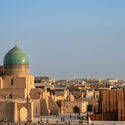
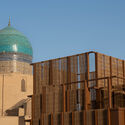
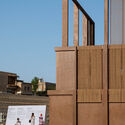
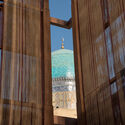
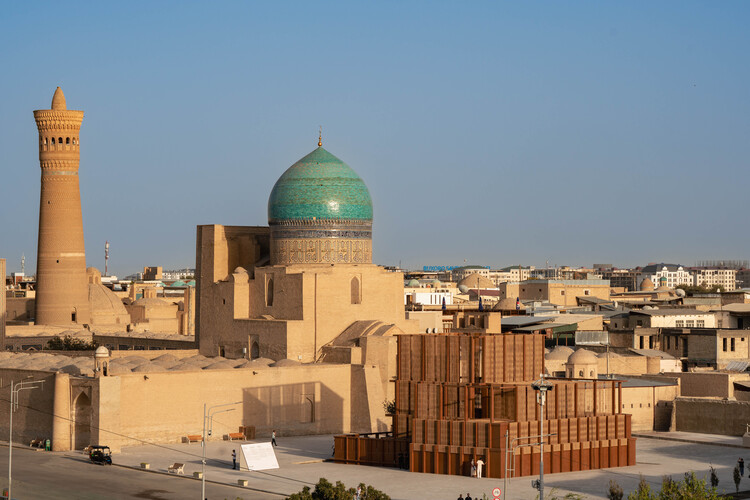
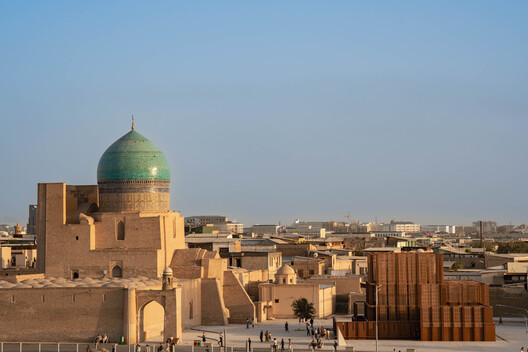
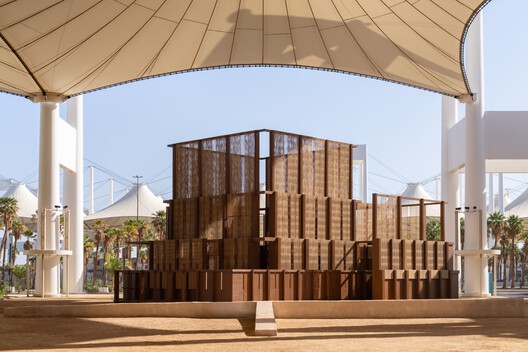
EAST Architecture Studio's project offers a contemporary interpretation of a musalla, drawing on vernacular practices from Saudi Arabia to create a flexible space for prayer and gathering. The structure was constructed almost entirely from palm tree waste that was transformed into a new building material. The design is inspired by the connection between craftsmanship and spirituality found in weaving, featuring an open central courtyard and surrounding prayer spaces that form a structure resembling a loom. The layout emphasizes togetherness and proximity, core aspects of prayer in Islam. According to the architects, it unites the legacy of courtyard typologies in places of worship, the tradition of using date palm trees as a building material in Saudi Arabia, and the art of weaving rooted in ancient textile-making techniques from the Gulf region.
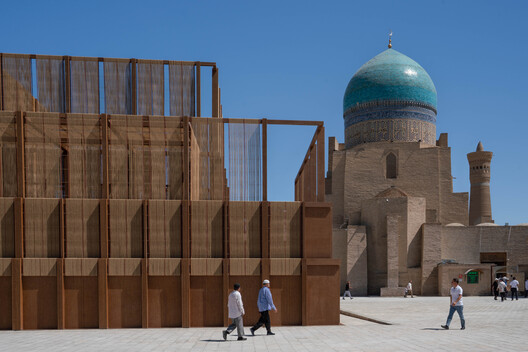
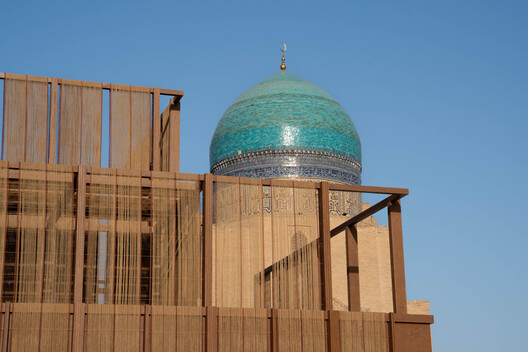
After being presented as a collateral event of the 19th International Architecture Exhibition – La Biennale di Venezia, the Diriyah Biennale Foundation relocated the musalla to Bukhara to retrace historical connections between Islamic societies and to renew their contemporary resonance. The structure's journey reflects the Foundation's mission to foster connections between Islamic cultures and to use international art exhibitions to propose a perspective on globalism centered on West and Central Asia. The project's mobility aligns with the AlMusalla Prize's objective of bridging Islamic architectural heritage with contemporary design and sustainable practice. Its new location, the inaugural Bukhara Biennial, takes place in a newly restored historic district, part of a conservation and revitalization initiative led by architect Wael Al Awar of design studio waiwai, with landscape design by VOGT Landscape Architects.
According to the Foundation, Jeddah and Bukhara share a legacy of openness to ideas and cultures from around the world. As a port city on the Red Sea, Jeddah has long been the gateway for pilgrims traveling to the holy cities of Makkah and Madinah, hosting Muslims from diverse backgrounds who have shaped its cultural identity. Bukhara, a historic center of learning along the Silk Road, served as a hub of theology, science, art, architecture, and commerce for more than a thousand years. The collaboration between the Diriyah Biennale Foundation and the Uzbekistan Art and Culture Development Foundation underscores their shared commitment to fostering contemporary creation and heritage preservation. The inaugural Bukhara Biennial runs from September 5 through November 20, 2025.
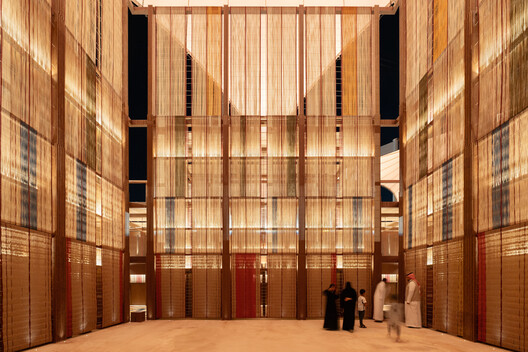
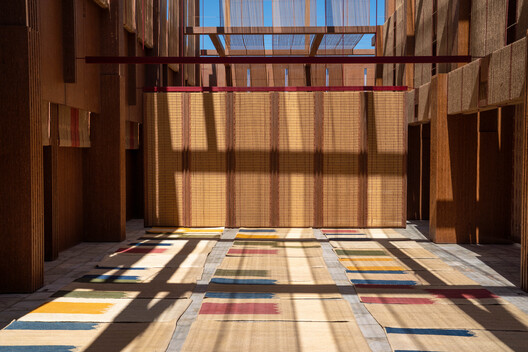
The competition brief called for a versatile, adaptable and modular space for prayer that welcomes Muslims and non-Muslims alike, and the fact that the musalla is now taking root in an entirely new context demonstrates these qualities. Islamic cultures have always been shaped by movement and openness to different influences, and the architectural heritage of Muslim societies demonstrates this fact. The musalla architectural typology in particular draws attention to the transient nature of temporary prayer spaces in Islamic societies - Prince Nawaf Bin Ayyaf, chair of the AlMusalla Prize
In other event-related news, the Lisbon Architecture Triennale announced ReSa Architects, an India-based practice known for its collective and socially engaged approach to spatial design, as the winner of the fifth edition of the Début Award. The 5th Seoul Biennale of Architecture and Urbanism opened on September 26 at Songhyeon Green Plaza in central Seoul and will be on view until November 18, featuring exhibitions, global forums, and citizen-led projects. Meanwhile, the 18th Istanbul Biennial opened its first phase of a three-year program unfolding from 2025 to 2027, which will remain on view until November 23, 2025, exploring themes of self-preservation and futurity.


